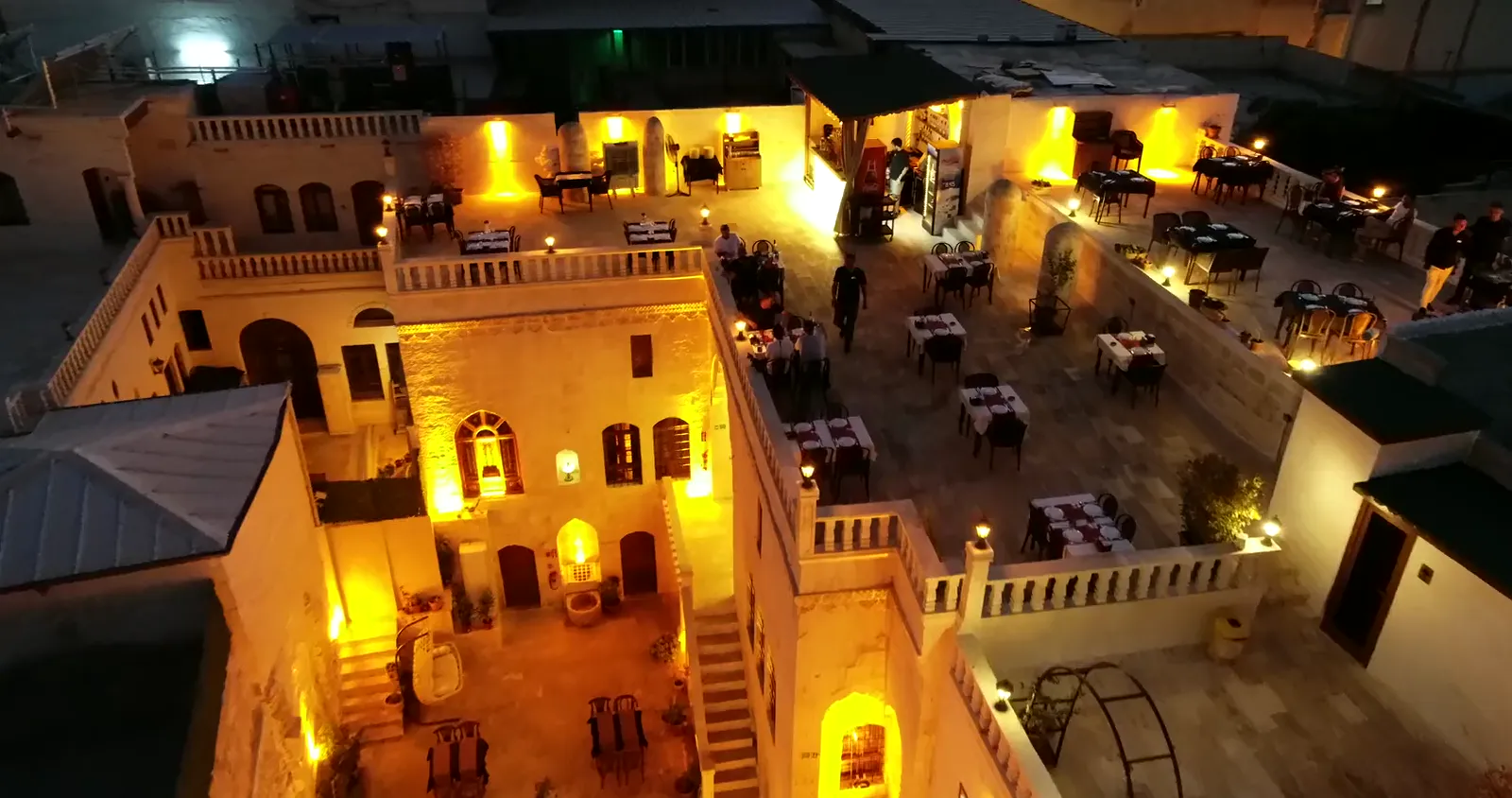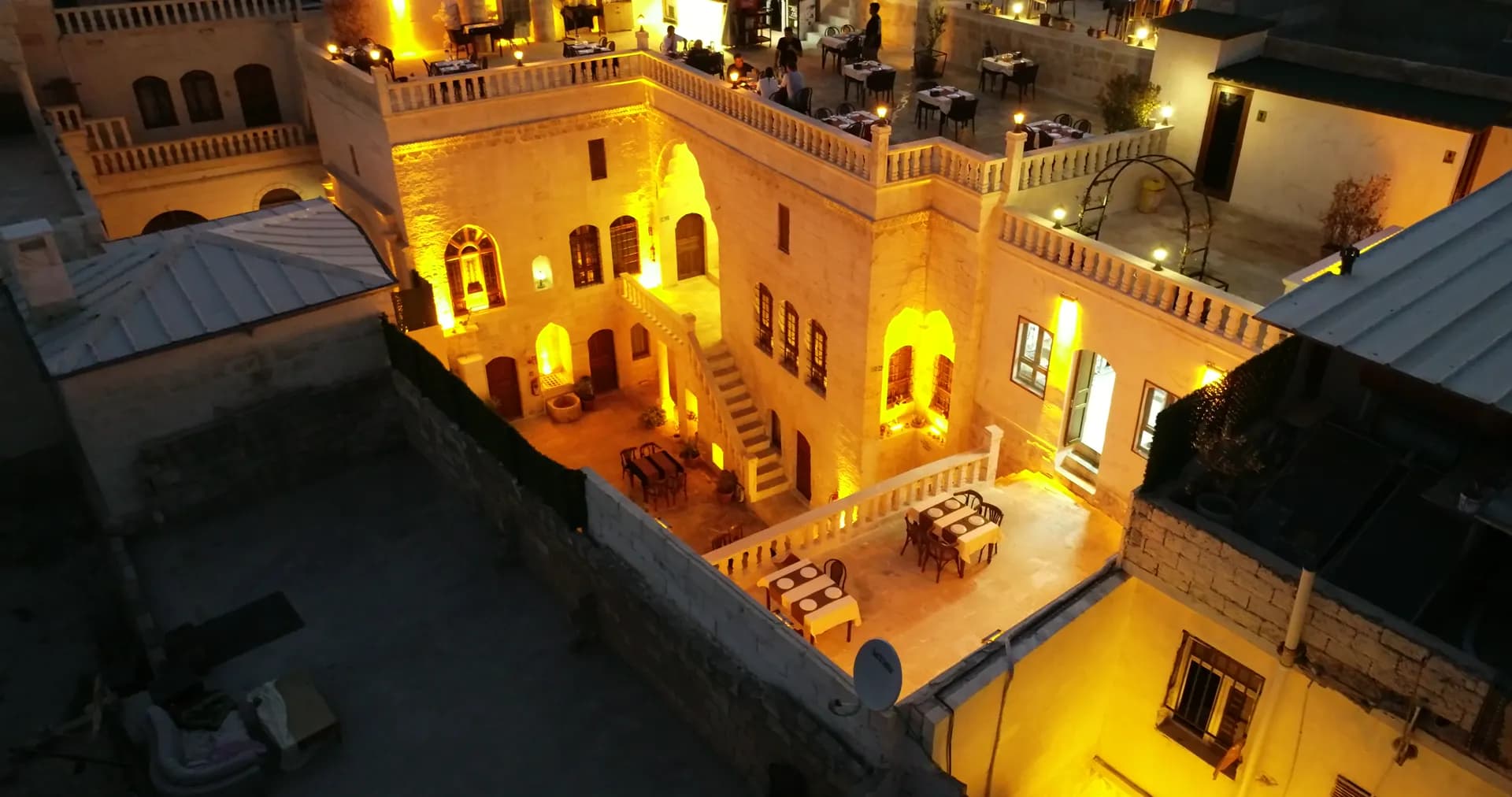
The courtyard lit by lanterns at night, from the air

The memory of stone, the story of the wind.

A house rising among Şanlıurfa's time-defying stone walls: Badgirli Konak, carrying a thousand years of faiths, cultures, architecture and nature.

1234567Ulu Cami150 m89
Schematic drawing; not to scale, layout is indicative.

1Stop 1 / 9

Layers of a legacy: from Rome to monastery to mansion

Built in 1175, in the same era as the Red Church, the house was long known locally as the “Monk’s House”. Its roots reach deeper still: on this land, where Roman walls still stand, many civilisations left their mark.

As the house tells it, this was a place of spiritual gatherings and religious conversation, a centre where monks lived that served the Great Mosque as a monastery. The wide vaulted hall upstairs was where clergy of different faiths met and shared their teachings.

The star motifs on the ceilings, the geometric ornament and the Armenian stonework still carry the echo of those days.

The historian Prof. Dr. Cihat Kürkçüoğlu also suggests the house's stones may reach back to the era of the Great Mosque, and that stones from a building linked to a church may have been reused here.
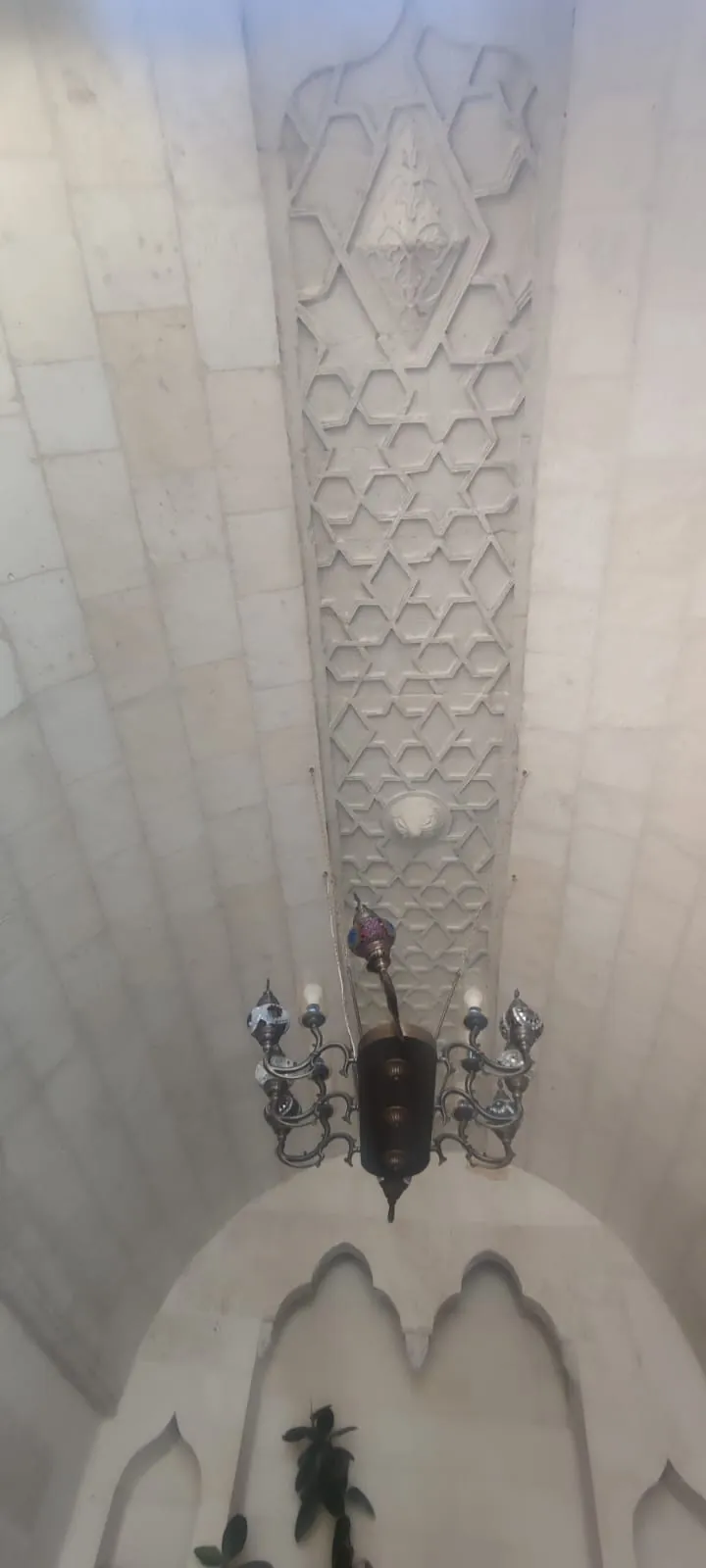
A carved stone panel with star and geometric patterns in the vault of the house

2Stop 2 / 9

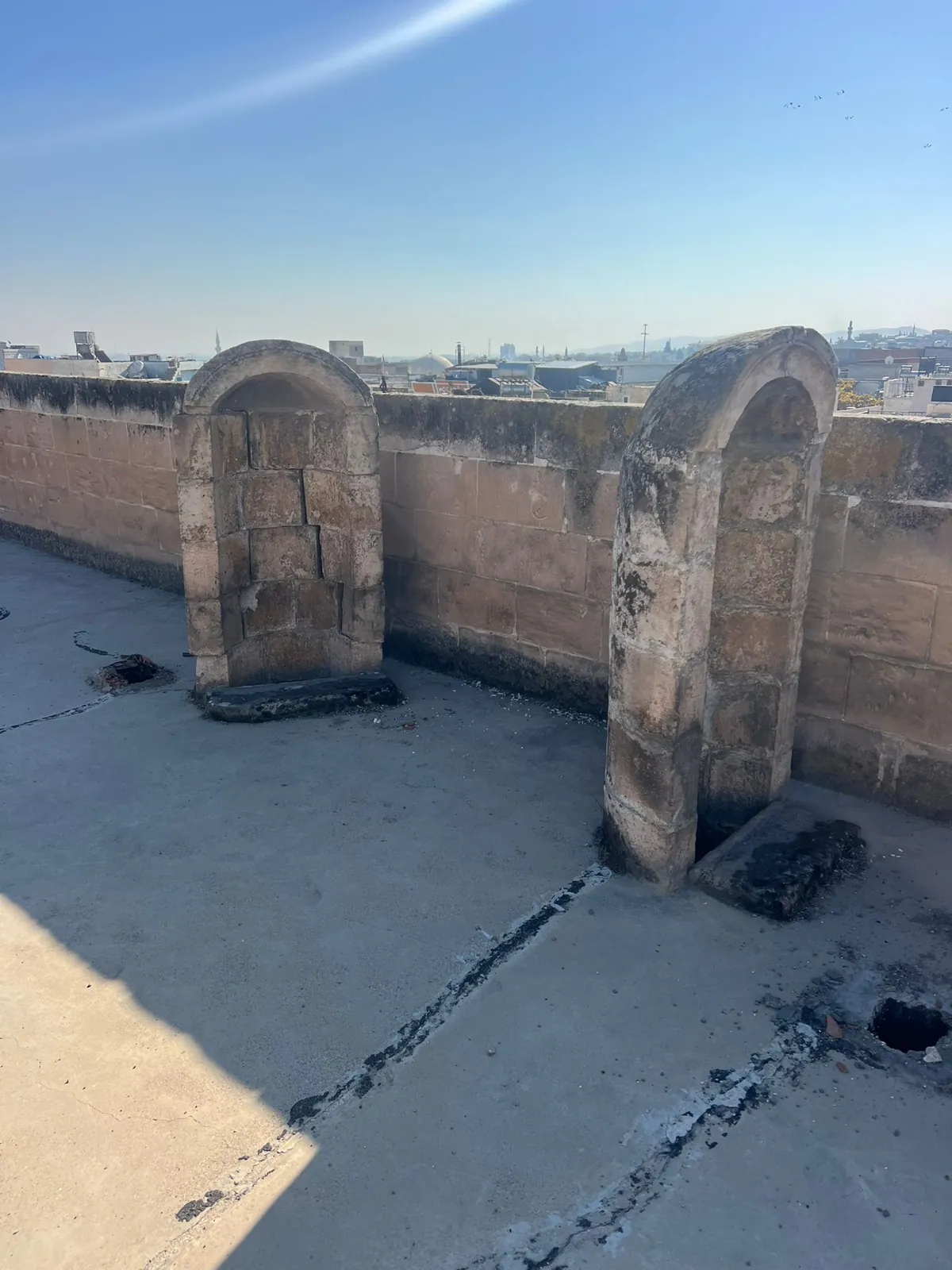
The badgir: a 2,500-year-old solution, rare in Urfa

The four badgirs of the house are more than a way to keep cool; they are rare Urfa examples of the ancient world's climate engineering. The Iranian city of Yazd has more than 700 windcatchers, while in Urfa only a handful of houses have such a system.

Rising 1.5 to 2 metres and 40 to 50 centimetres wide, the stone towers catch Urfa's summer wind with their west-facing mouths. The air travels through hidden channels in the walls, called livan, and meets water reservoirs on the floor below; when it is 45 degrees outside, the house can stay at 25 to 30.

An old Urfa folk song, “They have a badıya at home”, speaks of the prestige of owning this rare technology. The house takes its name from these towers.

Two stone badgirs rising from the roof of the house

3Stop 3 / 9

The bearded arch and the silent arcades

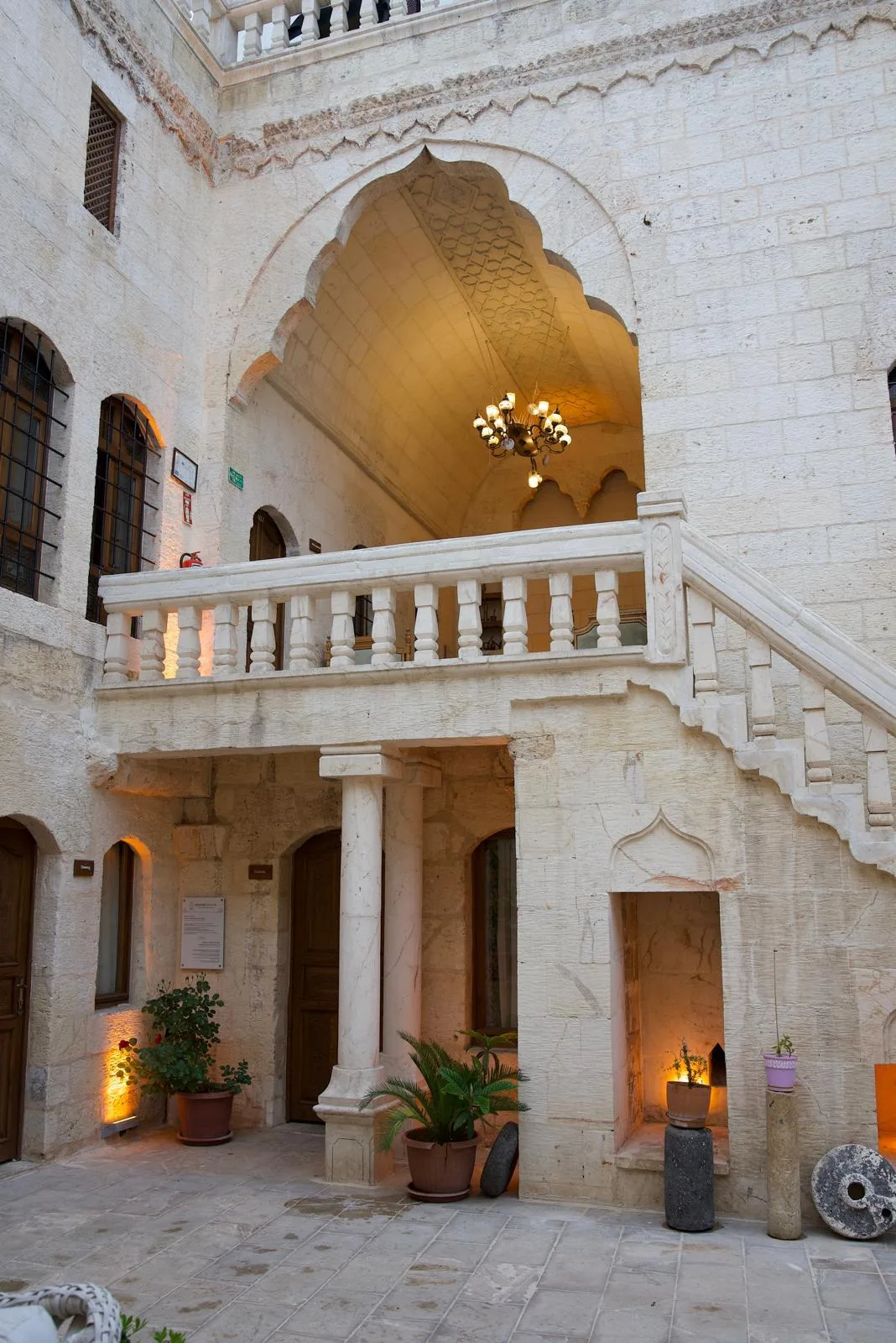
The “bearded arch” at the iwan entrance is a rare geometric work of Urfa architecture. Three great arcades surround the courtyard.

They were built not only for shade in the summer heat but as a stage for conversation, music and hospitality. In every corner of the house the stone speaks quietly, and light and shadow tell its history together.

See this spot in 360°
The iwan, arch and stone stair in the courtyard

4Stop 4 / 9

Walls rising from Rome, and an ancient well

The Well Room stands directly on Roman stone walls a metre and a half thick; those walls still stand and form the foundation of the house.

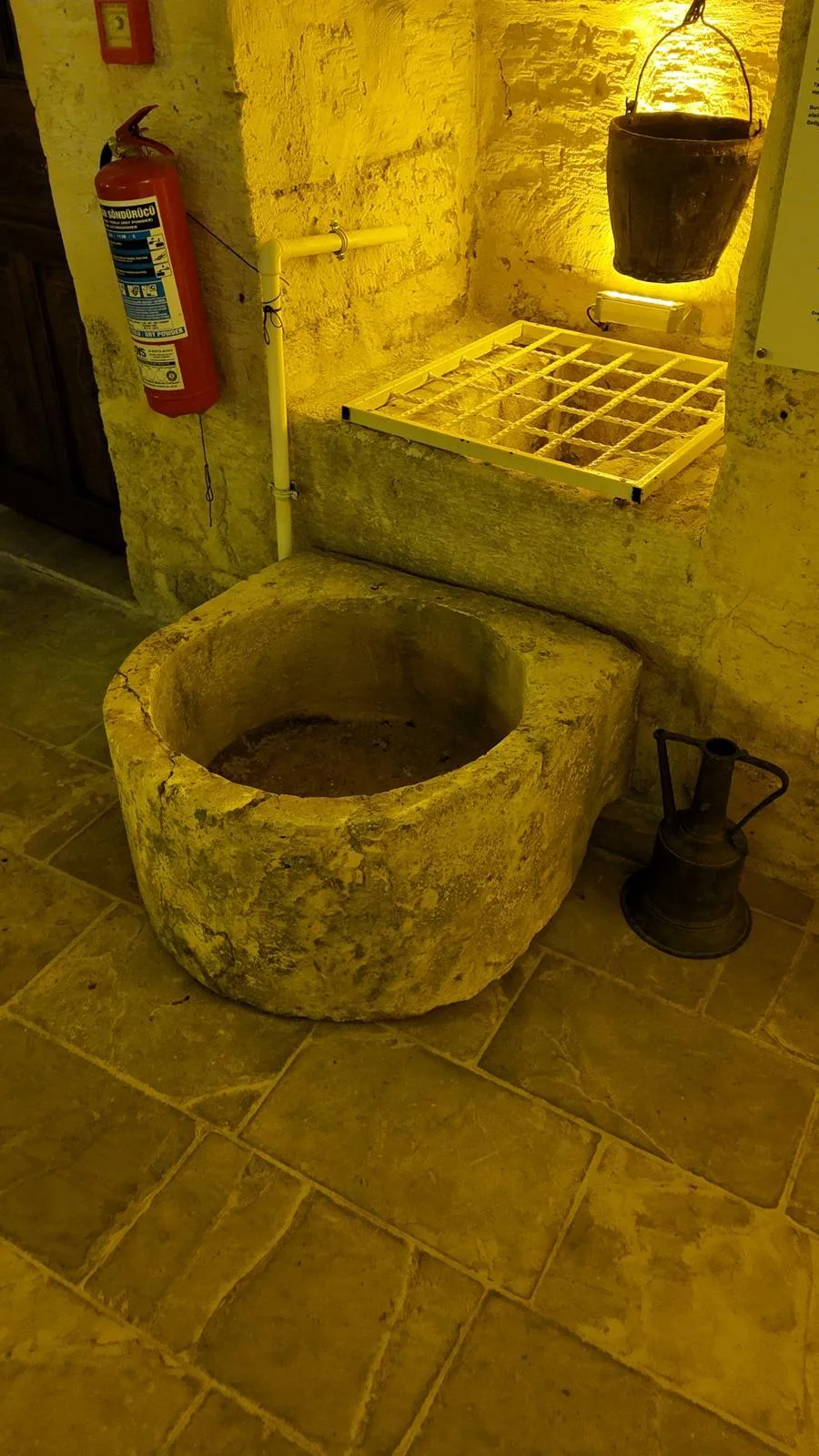
The well at the centre of the room, eight to ten metres deep, is lined entirely with carved stone and has footholds to climb down. The difference in level between the well and the room floor shows that it belongs to a much older period. A special chimney above it carries the damp away so that it never reaches the room.

See this spot in 360°
The carved stone well in the Well Room

5Stop 5 / 9

The baptismal pool

One of the most sacred corners of the house is its baptismal pool. In Christian belief, baptism is the rite in which a person is cleansed by holy water and born again; this stone pool, where infants and adults were baptised, is told as one of the clearest traces of the house's monastic past.

As the house tells it, two of the rooms also still carry traces of the time when clergy prayed and gathered here.

6Stop 6 / 9

The architect of water: hidden paths inside the walls

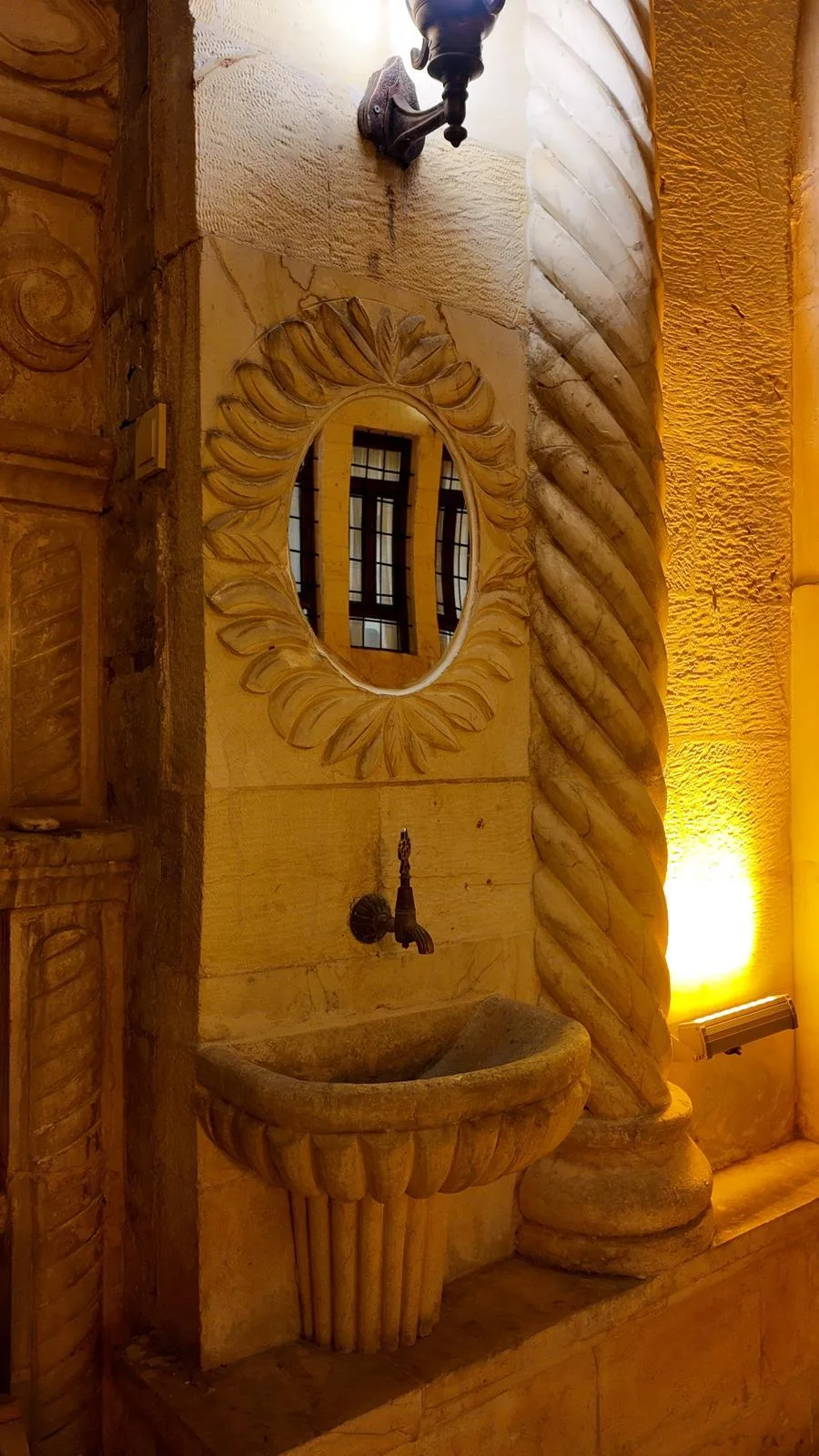
The house drains its water far more cleverly than the traditional Urfa spout: two separate channels work out of sight inside the walls. Rain from the roof runs away silently, without spoiling the façade.

The best engineering is the kind you never notice, like the water running inside these walls.

See this spot in 360°
A stone fountain and carved mirror in the house

7Stop 7 / 9

The prayer above the door

The historic name of the house is the Şeftalioğulları House. In the dead end of Karanlık Kapı (Dark Gate) Street in the old city, above the door of the room beside the east side of its iwan, there is an undated inscription.

İlahi fazl-ı lütfünle keremBabın küşad eyleBu hane sahibin ya Rabİki ‘alemde şâd eyle
O Lord, with Your divine grace and benevolence, open the door of generosity. Make the owner of this house happy in both worlds, O Lord.

8Stop 8 / 9

The Holy Mandylion: light from King Abgar

Legend has it that when King Abgar, who ruled Urfa, fell ill with leprosy, he wrote to Jesus asking for a cloth that had wiped his face. When the cloth reached Urfa it caused great strife, and in the end it fell into the well of the Great Mosque, from which a flame rose. It is said that people sought healing in the water of that well until recent times.

Ahmet Doğan, the owner of the house, retells this legend and other tales of Urfa from a seat in the courtyard; the full series is on the house's Instagram.

Watch the stories on Instagram
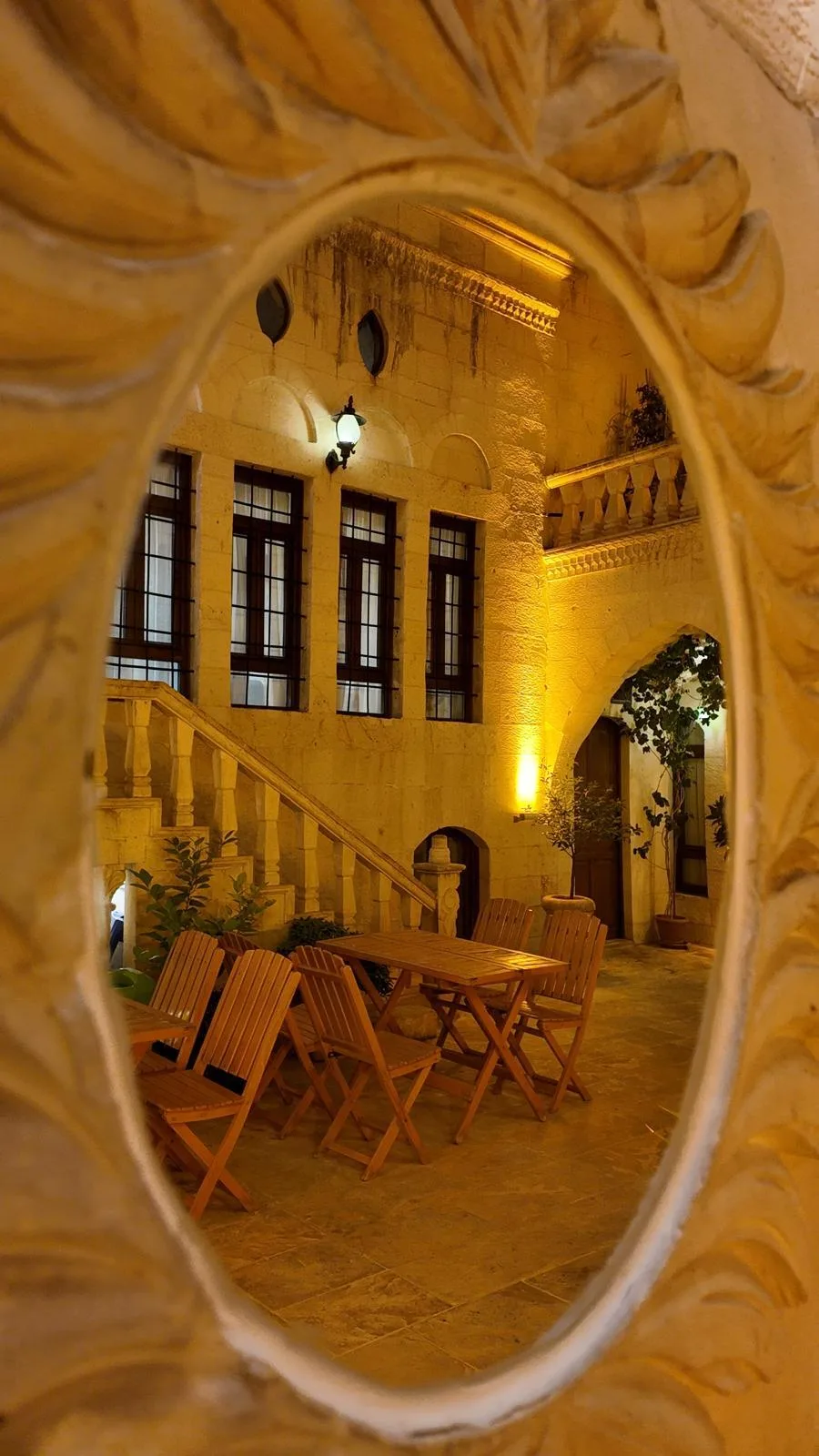
The courtyard reflected in a carved mirror

9Stop 9 / 9

Our master craftsmen: İsmail Usta and Hasan Usta

All the woodwork in the house came from the hands of İsmail Usta and Hasan Usta. Every door, window detail and ornament by İsmail Usta, who has proven himself in private mansions from Cappadocia to Thrace and in Urfa, was designed for this house alone; these patterns have been used nowhere else.

İsmail Usta's greatest worry is that this craft may not pass to a new generation. His work, though, will live on for many years in the doors and windows of the house.

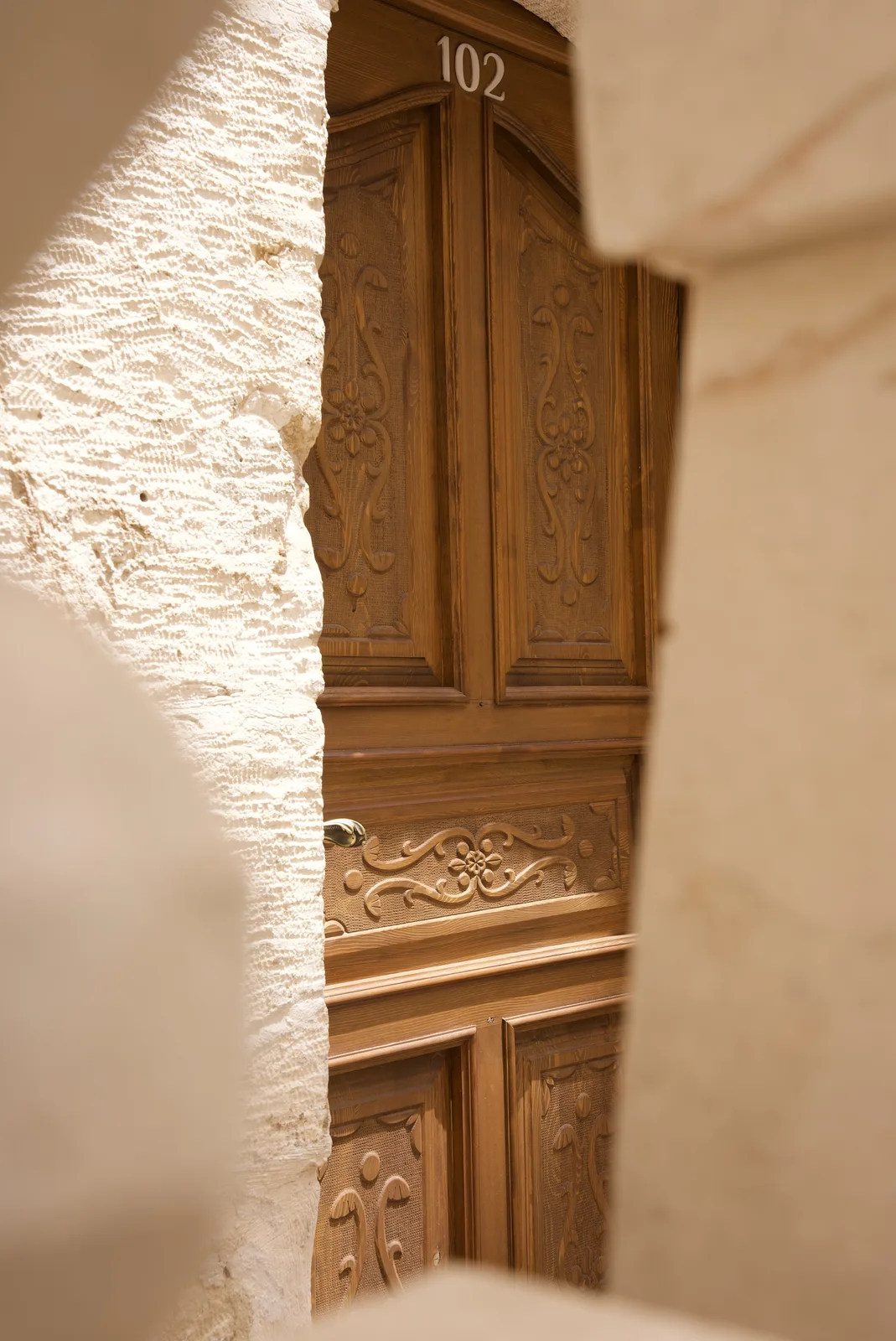
Hand-carved woodwork on a room door

History carried by the wind, a story kept in stone, time living in the sacred.

The names of the rooms

The rooms take their names from the myths and kings of this land, and from traces of the house itself.

  • The Well Room

    The echo of Rome, the silent witness of the ancient well.

    Named for the historic well preserved inside the room, one of the oldest traces of the house.

  • Mazdek Room

    It stands for justice.

    Mazdak was a thinker of Sasanian Iran who preached equality (5th–6th century AD).

  • Enkidu Room

    A symbol of strength and shared life.

    Enkidu is the wild man of the steppe in the Epic of Gilgamesh, and the king's closest friend.

  • Simurgh Room

    A symbol of rebirth and wisdom.

    The Simurgh is the wise winged bird of Eastern tales, said to live on Mount Qaf.

  • Gilgamesh Room

    A family warmth woven with legend.

    Gilgamesh, the king of Uruk who sought immortality, hero of the first great written epic.

  • Mithri Room

    The mystic layers of civilisations and faiths.

    Named for Mithra, god of light and of the given word, who also stands among the statues of Mount Nemrut.

  • Mesopotamia Room

    The mystic layers of civilisations and faiths.

    The land between two rivers; Urfa sits at the northern edge of the Fertile Crescent.

  • Sargon Room

    A symbol of strength and shared life.

    Sargon founded the Akkadian Empire and first united Mesopotamia under one rule (24th century BC).

  • Medusa Room

    Where mythology meets stone.

    Medusa is the Gorgon of Greek myth whose gaze turned onlookers to stone; in antiquity her face was carved as a protective charm.

  • Fireplace Room

    The peace of winter nights.

    Named for its stone fireplace: the room for winter evenings.

  • Anasis Room

    A symbol of rebirth and wisdom.

  • Sin Room

    The grace of simplicity.

    Sin is the moon god of Harran, lord of the crescent, in whose name temples rose for centuries.

  • Nimrod's Throne

    The emblem of splendour and divine power.

    In Urfa legend, the king who cast Abraham into the fire, which turned to water while the logs became fish.

At the house

  • Spread breakfastA traditional Urfa breakfast made with local produce.
  • Room serviceFood and drinks served to your room.
  • Daily housekeepingRooms are cleaned with care every day.
  • Free Wi-FiFast internet throughout the house.
  • Courtyard and terraceOpen-air spaces to sit and rest all day.
  • CelebrationsThe Zerzembe hall for gatherings and special days.