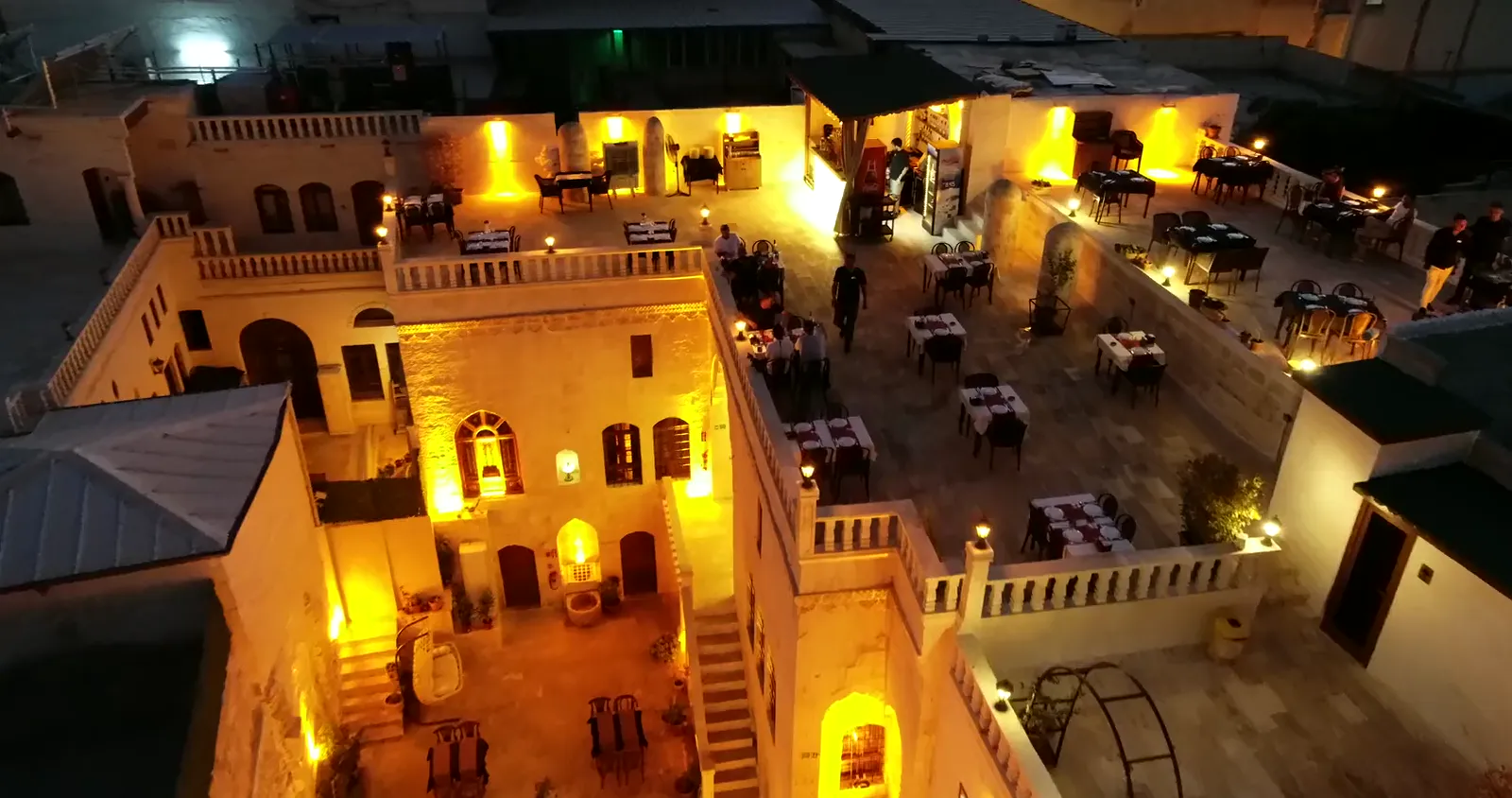
The Well Room
30 m² · 3 guests · Historic well
Named for the historic well preserved inside the room, one of the oldest traces of the house.
See the roomRooms
Thirteen stone rooms, each opening onto the courtyard, a story and a name.
Thirteen rooms, thirteen names.
From Simurgh to Sargon, each of the thirteen rooms takes its name from a myth or a king of Mesopotamia, or from a trace of the house itself.
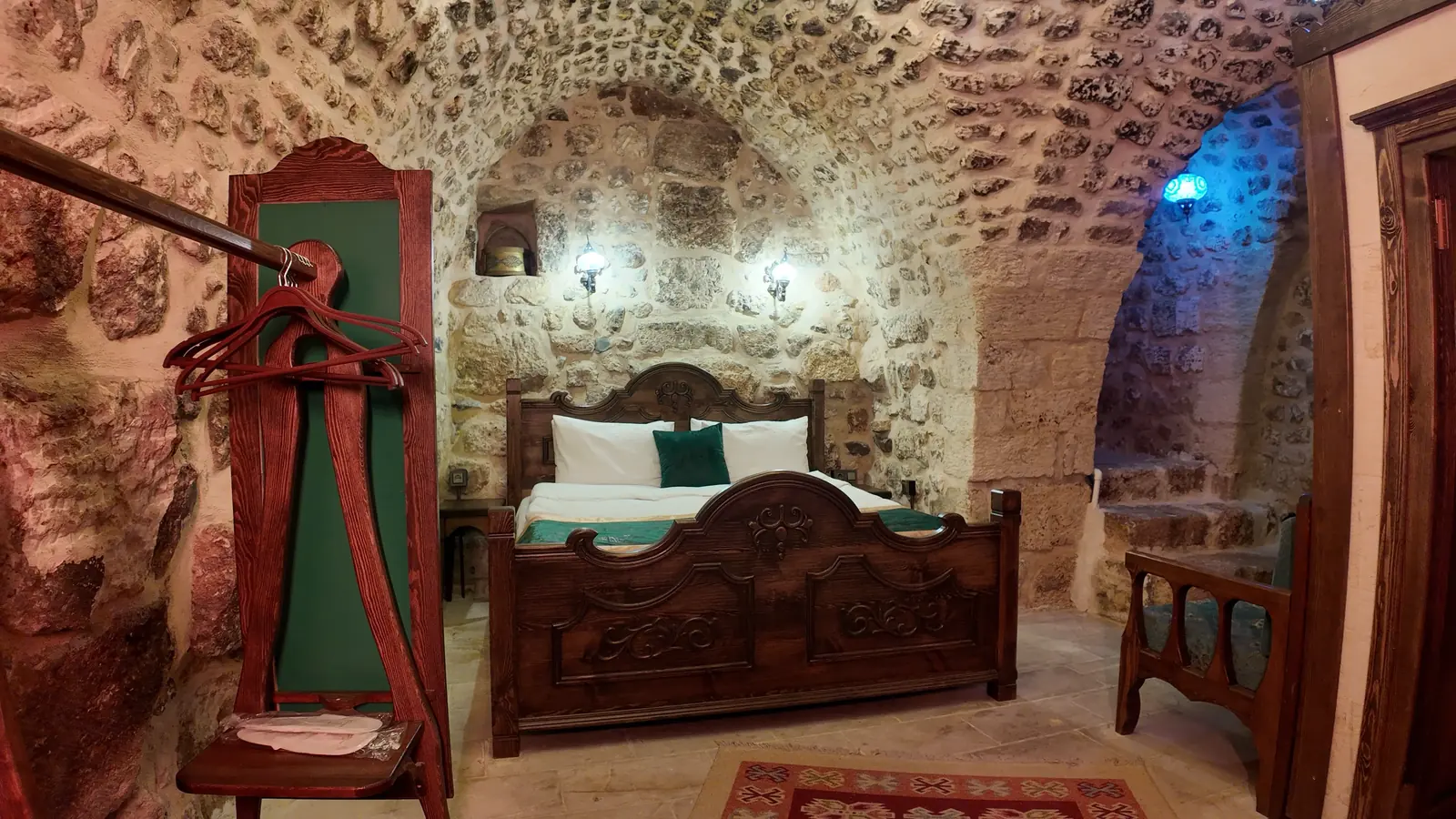
The Well Room
30 m² · 3 guestsNamed for the historic well preserved inside the room, one of the oldest traces of the house.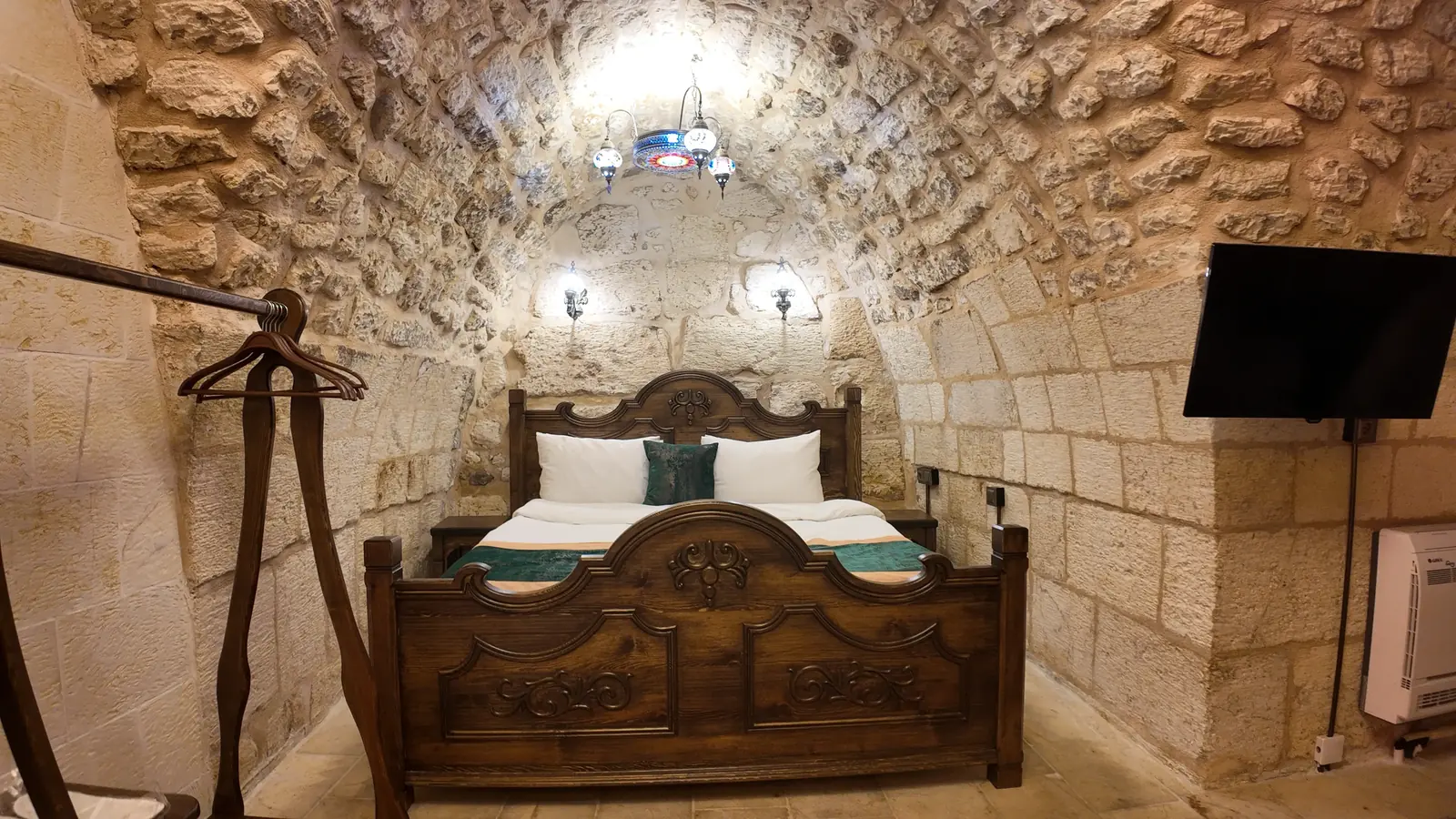
Mazdek Room
30 m² · 2 guestsMazdak was a thinker of Sasanian Iran who preached equality (5th–6th century AD).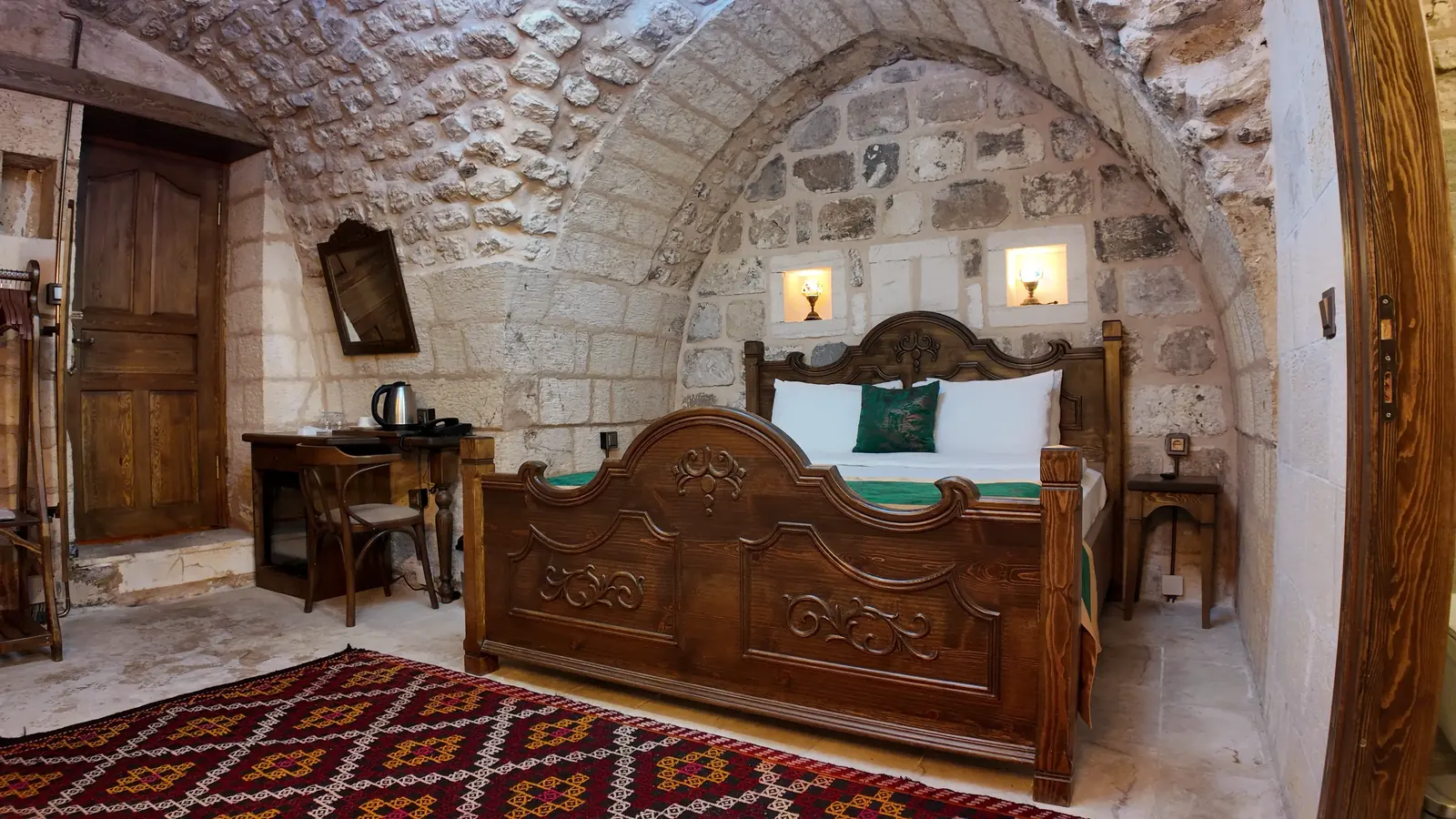
Enkidu Room
30 m² · 3 guestsEnkidu is the wild man of the steppe in the Epic of Gilgamesh, and the king's closest friend.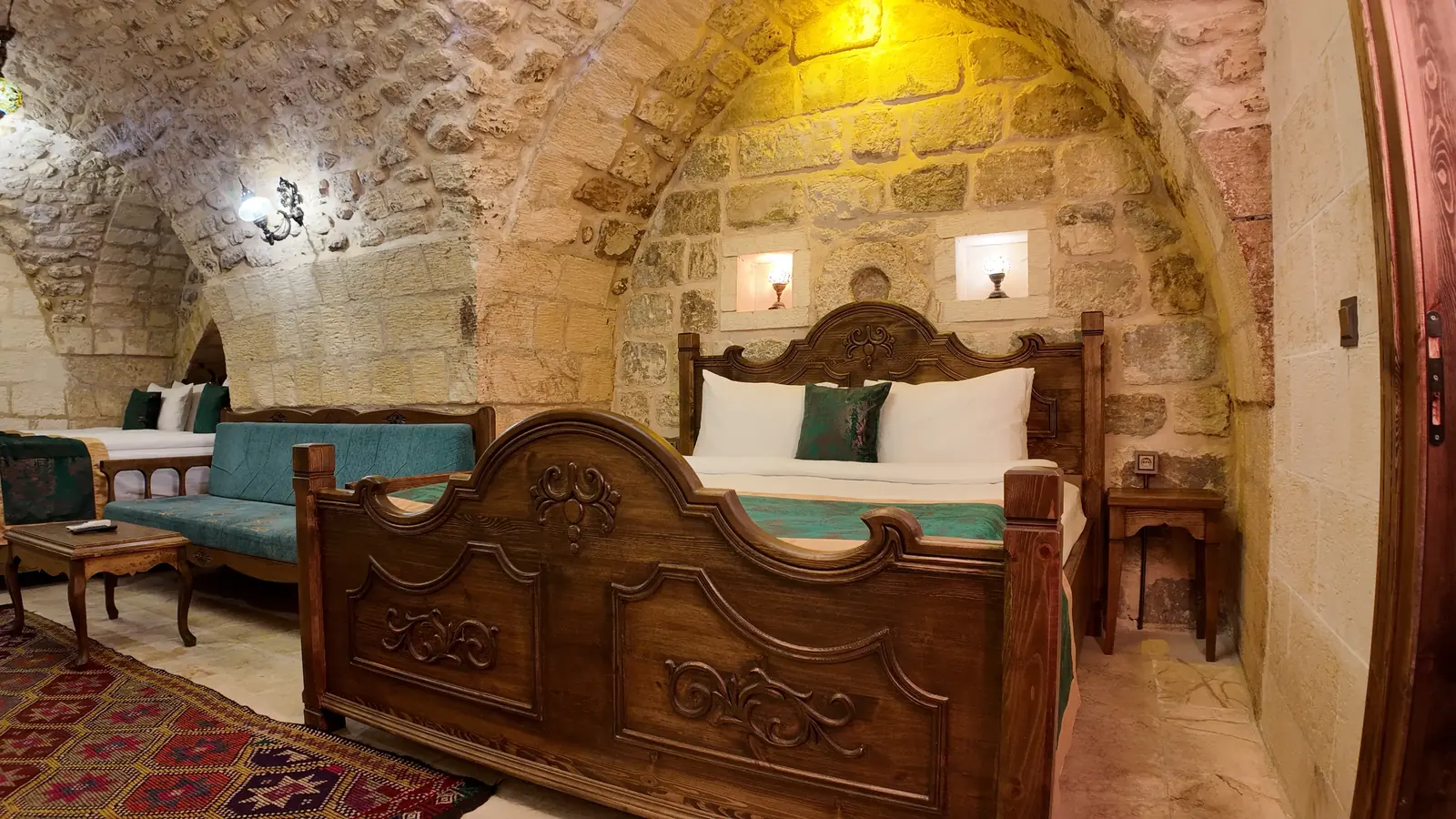
Simurgh Room
50 m² · 5 guestsThe Simurgh is the wise winged bird of Eastern tales, said to live on Mount Qaf.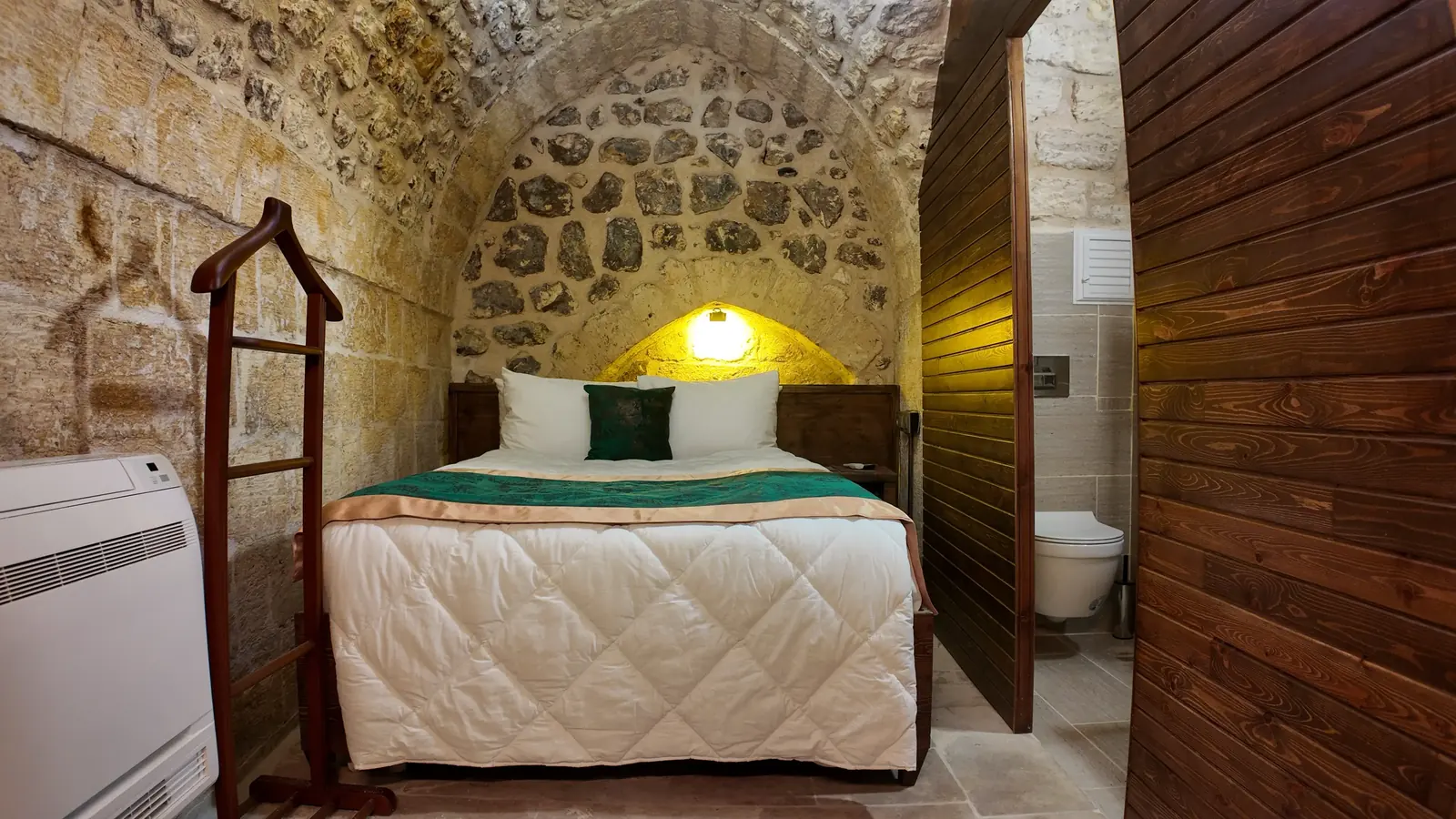
Gilgamesh Room
20 m² · 2 guestsGilgamesh, the king of Uruk who sought immortality, hero of the first great written epic.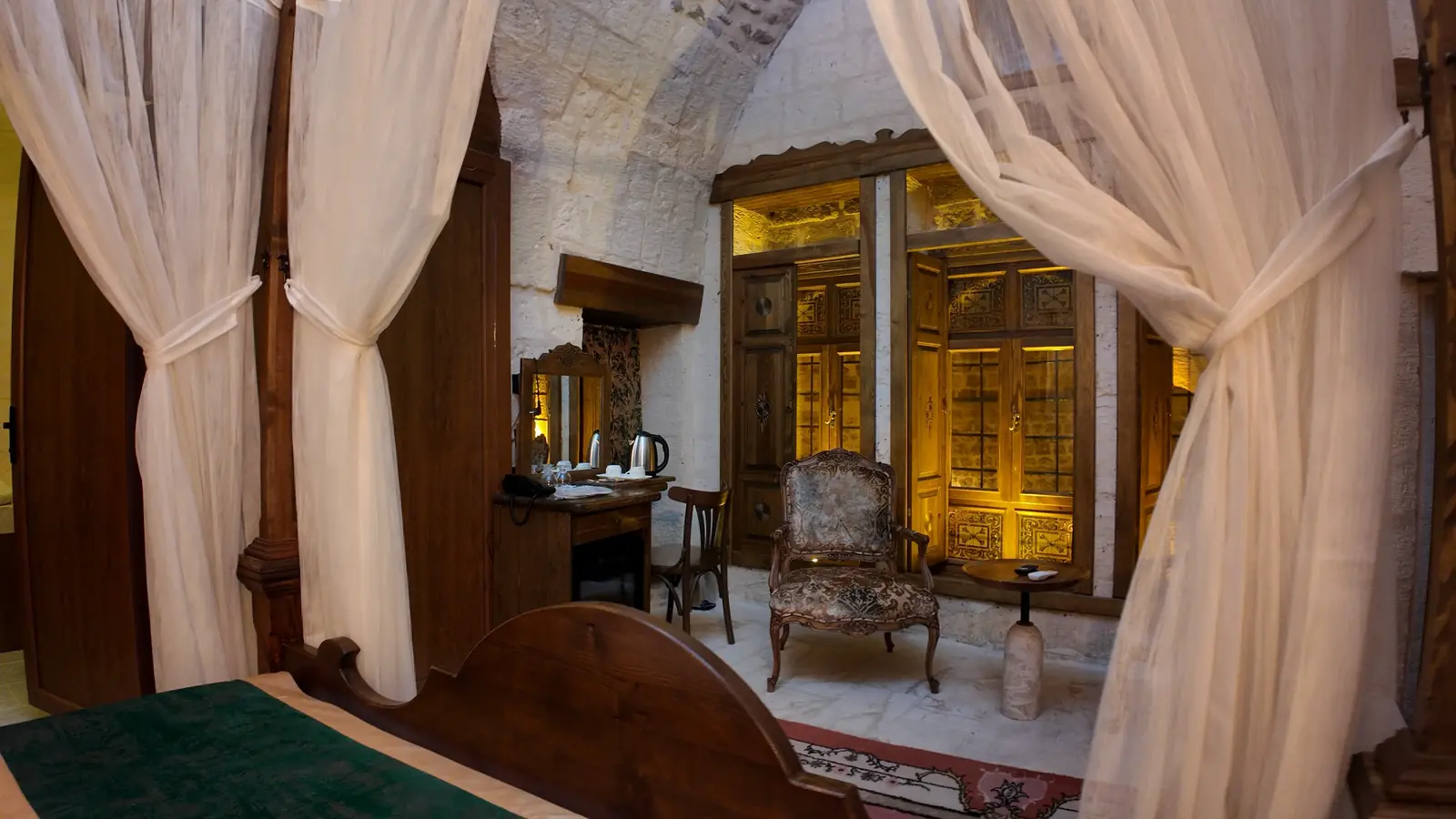
Mithri Room
45 m² · 3 guestsNamed for Mithra, god of light and of the given word, who also stands among the statues of Mount Nemrut.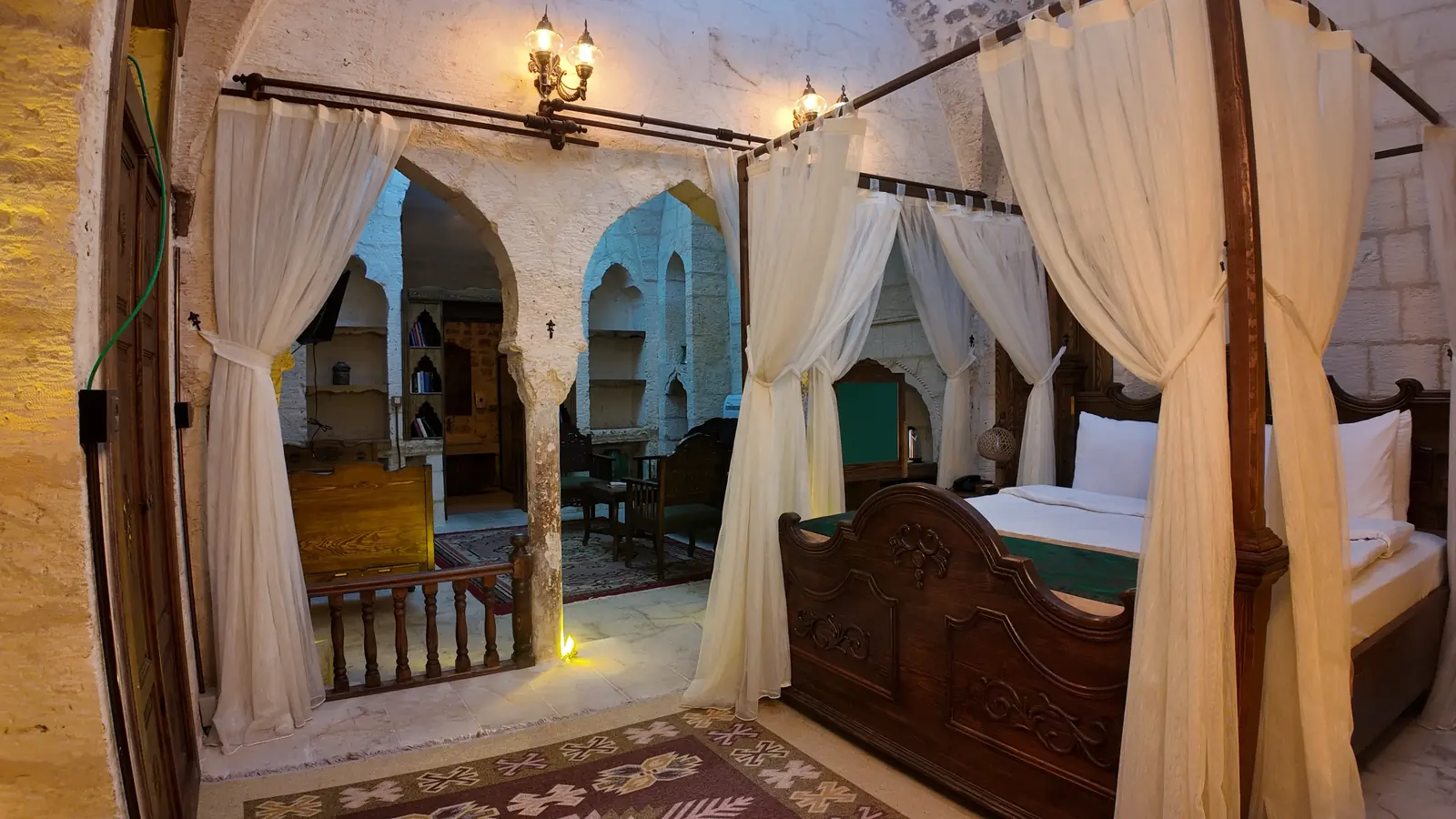
Mesopotamia Room
80 m² · 3 guestsThe land between two rivers; Urfa sits at the northern edge of the Fertile Crescent.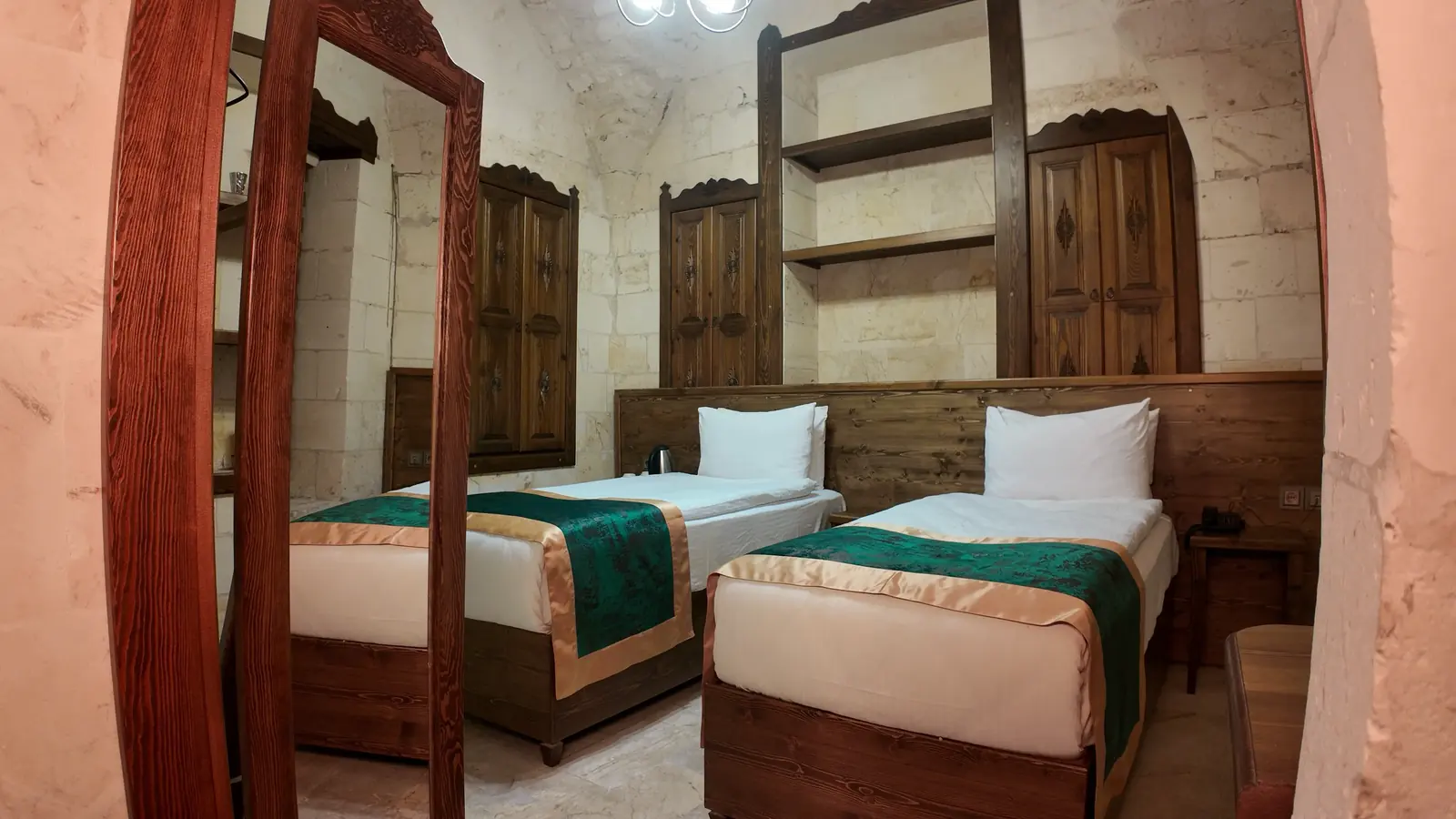
Sargon Room
30 m² · 3 guestsSargon founded the Akkadian Empire and first united Mesopotamia under one rule (24th century BC).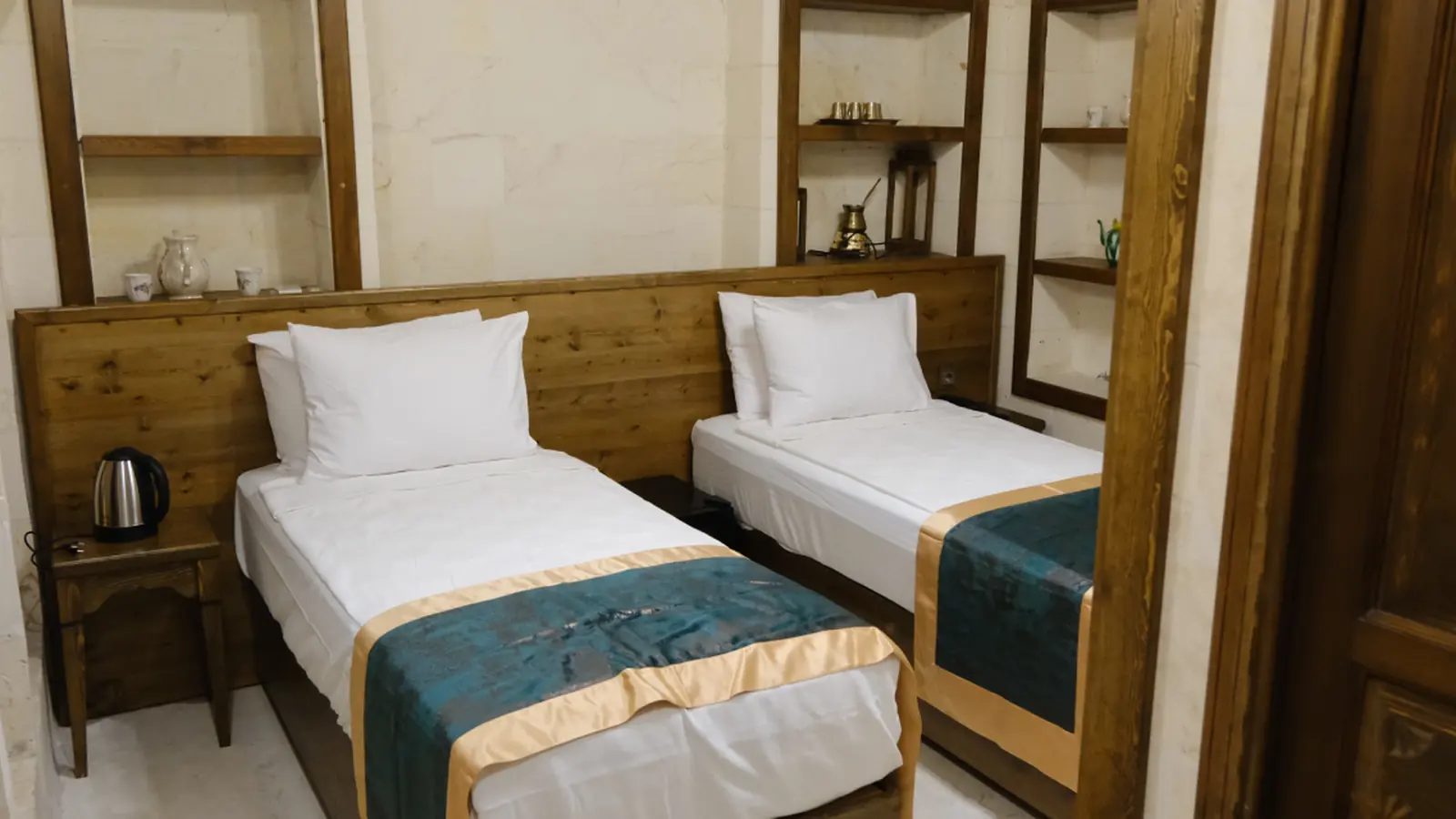
Medusa Room
30 m²Medusa is the Gorgon of Greek myth whose gaze turned onlookers to stone; in antiquity her face was carved as a protective charm.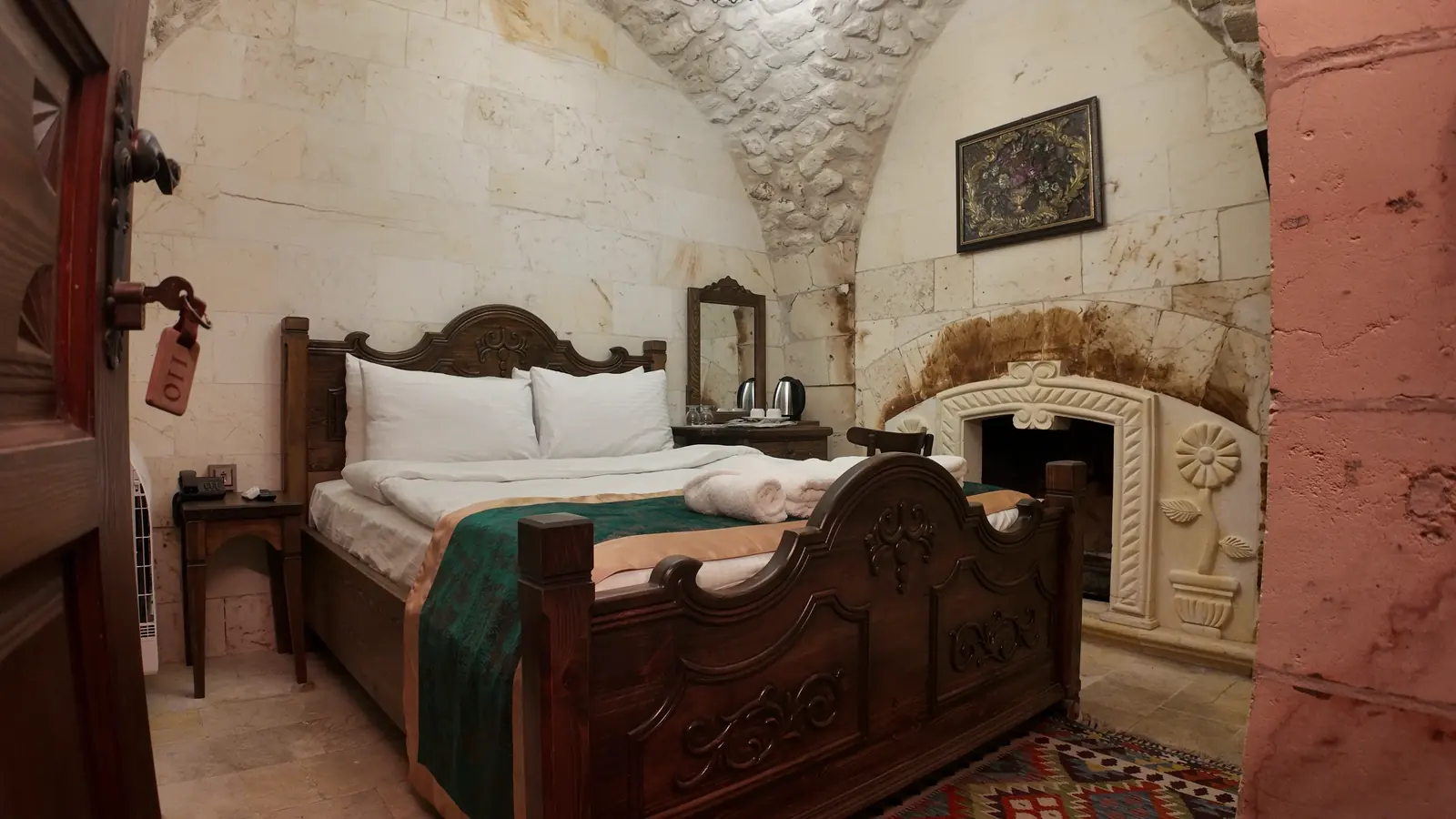
Fireplace Room
30 m² · 3 guestsNamed for its stone fireplace: the room for winter evenings.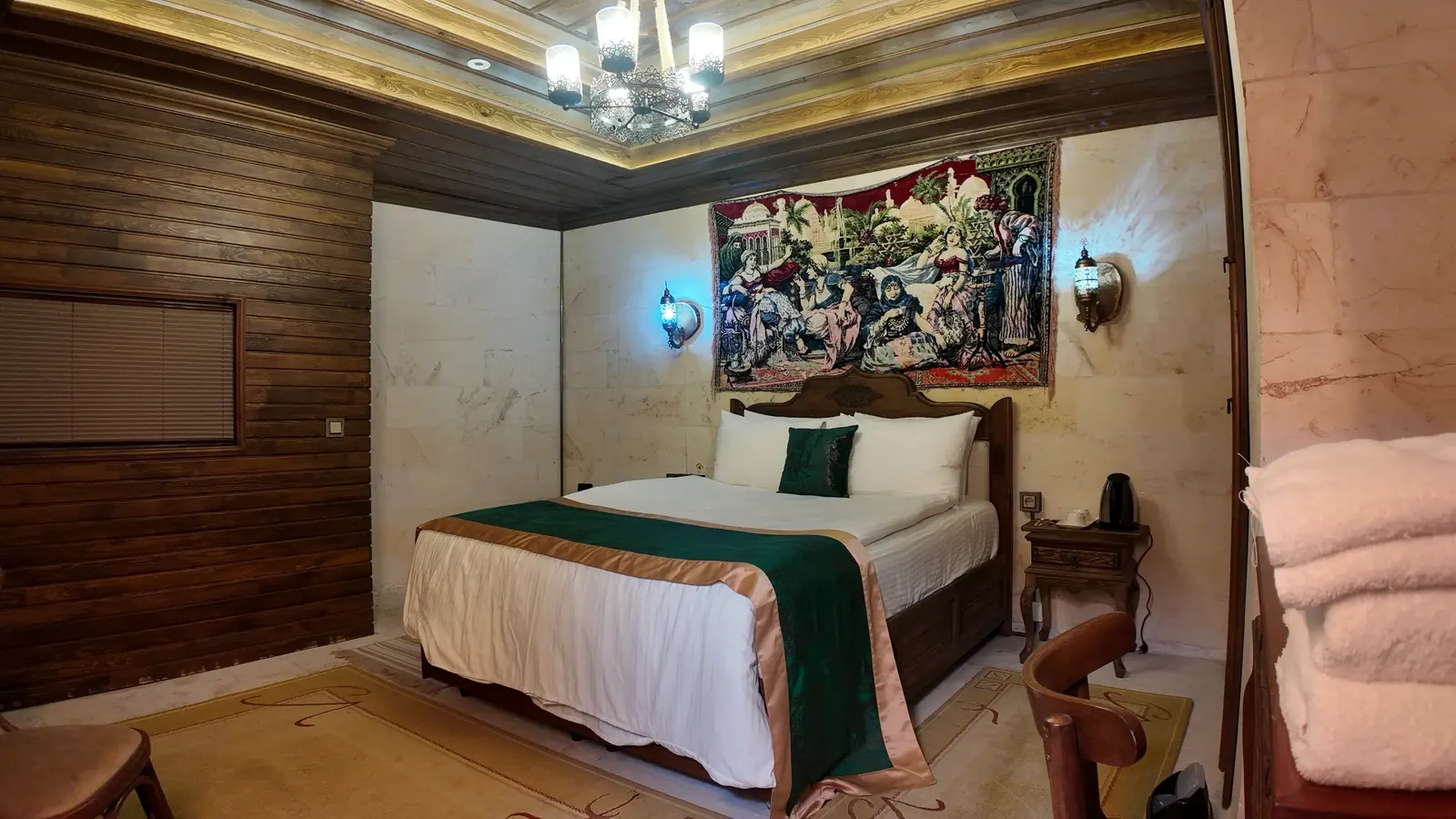
Anasis Room
30 m² · 3 guestsA 30 m² family room facing the courtyard; king bed, sleeps 3.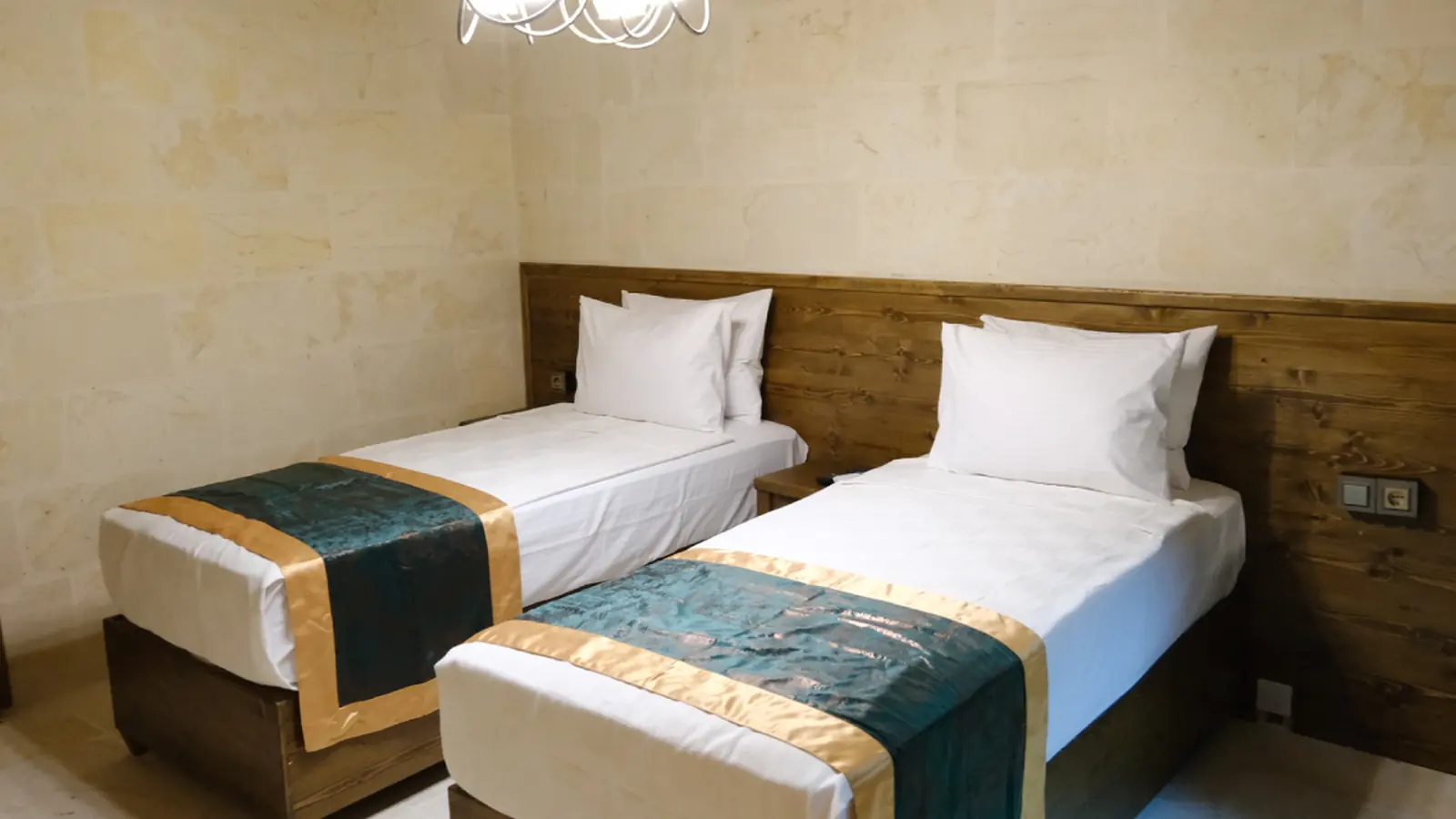
Sin Room
30 m²Sin is the moon god of Harran, lord of the crescent, in whose name temples rose for centuries.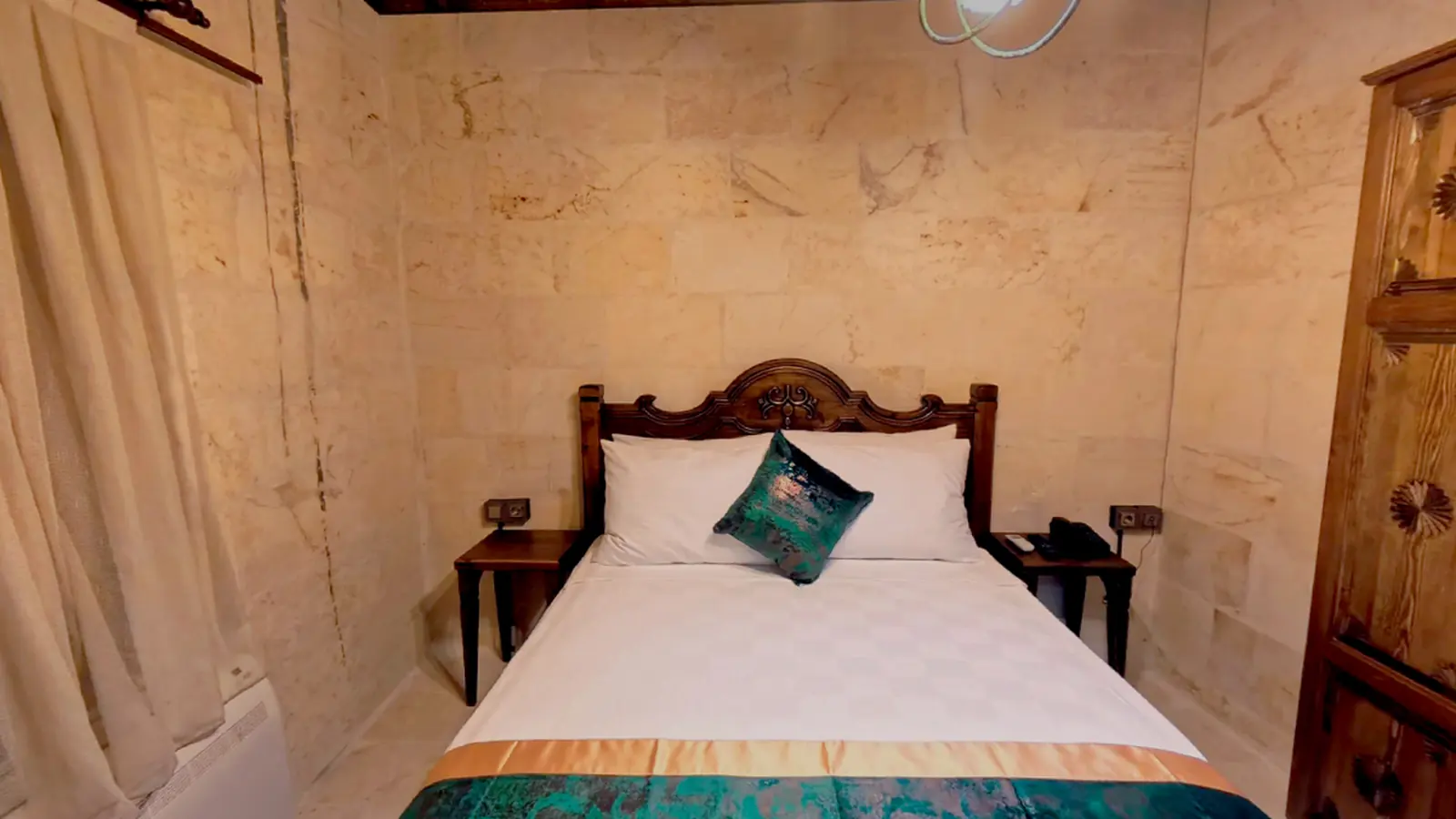
Nimrod's Throne
30 m² · 3 guestsIn Urfa legend, the king who cast Abraham into the fire, which turned to water while the logs became fish.